What is Taoism?
And are you a Taoist?
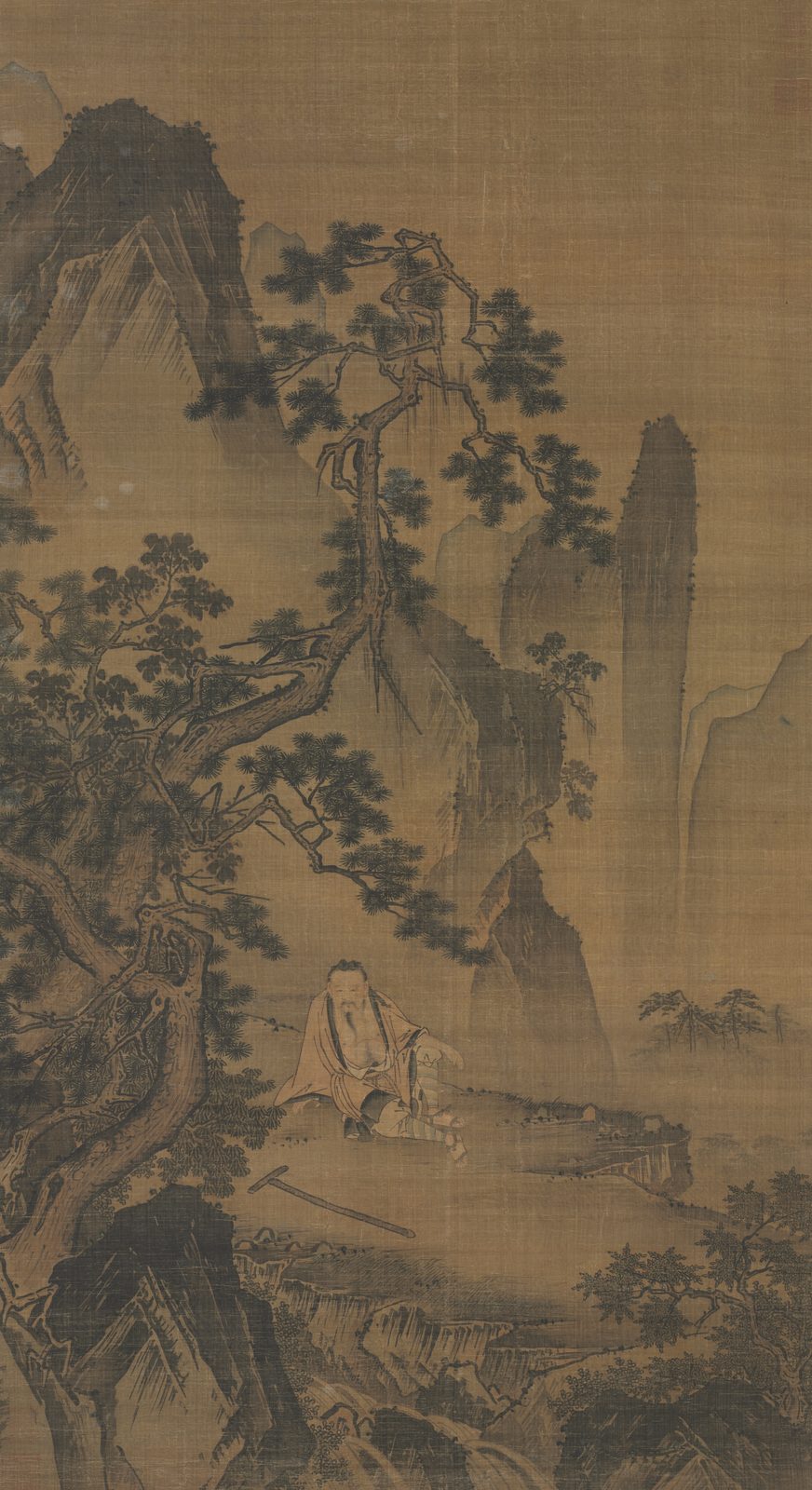
You go with the flow, you don't force things, and somehow they tend to work out.
Taoism (also spelled Daoism) comes from ancient China, from the Tao Te Ching attributed to Laozi and the writings of Zhuangzi. It teaches living in harmony with the natural way of things, called the Tao.
Best-known voices: Laozi · Zhuangzi.
Signs you might be a Taoist
- Cosmic order. Life has a bigger pattern or purpose.
- Equanimity. You stay calm and even.
- Nature over custom. Rules must earn your respect; you do things your way.
- Flow. You go with the flow and don't force things.
The Taoist profile
The test measures nine traits. This chart shows where a typical Taoist sits on each one: the further a point is from the centre, the more they lean toward the word printed there.
Where Taoism comes from
Philosophical Daoism grew out of China's Warring States period, roughly the fifth to third centuries BC, an age of rival states and competing teachers. Tradition credits the Daodejing to Laozi, an archivist at the Zhou court said to be an older contemporary of Confucius. But even the historian Sima Qian, writing a biography of Laozi around 100 BC, was unsure who he was, and most scholars now see the book as a compilation that took shape over time. Bamboo slips found at Guodian in 1993, in a tomb sealed around 300 BC, contain the earliest known Laozi material.
The second great text, the Zhuangzi, is named after Zhuang Zhou, a thinker of the fourth century BC whose playful stories about butterflies, cooks and useless trees question every fixed point of view. The version read today has 33 chapters, edited by Guo Xiang around AD 300, and only part of it is thought to come from Zhuangzi himself. Han dynasty scholars grouped these texts as Daojia, the school of the Way. From the second century AD a separate religious Daoism, with priests, rituals and temples, developed and revered Laozi as a divine figure. This plan draws on the earlier philosophical texts.
In the third century, Wang Bi wrote the commentary whose text became the standard Daodejing. The first English translation, by John Chalmers, appeared in 1868, and the Daodejing has since become one of the most translated books in the world. Today philosophical Daoism is read for wu wei, simplicity and harmony with nature.
6th c. BC
Traditional date of Laozi, said to be a Zhou archivist and an older contemporary of Confucius.
4th c. BC
Zhuang Zhou, known as Zhuangzi, lives in the state of Song; his stories form the core of the Zhuangzi.
c. 300 BC
A tomb at Guodian is sealed with bamboo slips holding the earliest known Laozi material, excavated in 1993.
168 BC
A tomb at Mawangdui is sealed with two silk copies of the Laozi, excavated in 1973.
c. 100 BC
Sima Qian's Records of the Grand Historian gives the first biography of Laozi, openly uncertain about him.
AD 142
Traditional date for Zhang Daoling's Way of the Celestial Masters, the start of organised religious Daoism.
c. AD 240s
Wang Bi writes his commentary on the Daodejing; its text becomes the standard version.
c. AD 300
Guo Xiang edits the Zhuangzi into the 33-chapter version read today.
1868
John Chalmers publishes the first English translation of the Daodejing in London.
Key Taoist thinkers
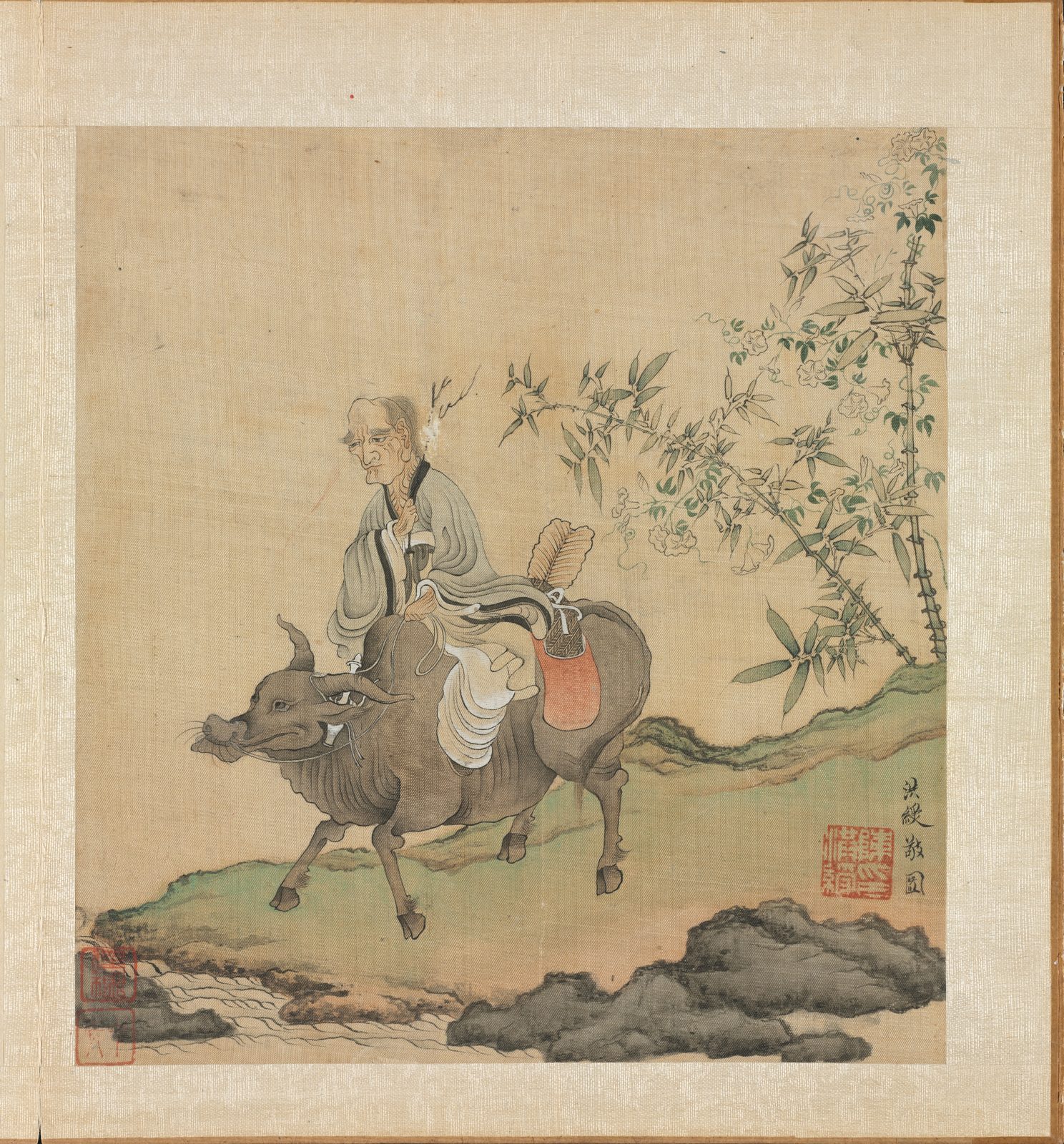
Laozi
The old master at the pass · trad. 6th c. BC
Softness, simplicity and the strength of water.
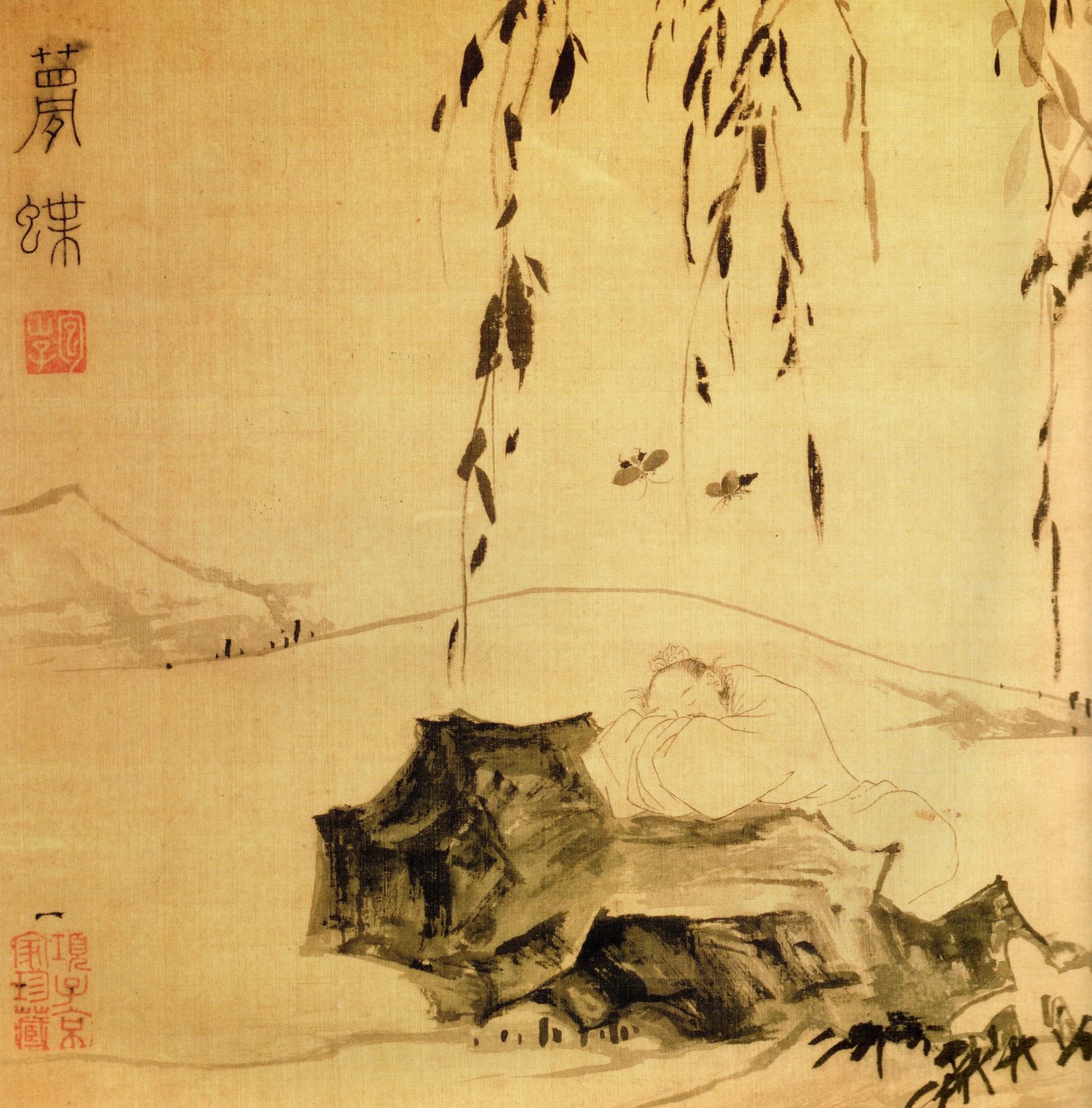
Zhuangzi
The butterfly dreamer who refused office · c. 369–286 BC
Playful freedom and doubt about every fixed view.
Close to Taoism
- Skepticism
You question everything, hold your opinions lightly, and you are very hard to fool.
- Epicureanism
You know that real happiness is quiet: good friends, simple pleasures and a mind at peace.
31 situations · about 12 minutes · free result